
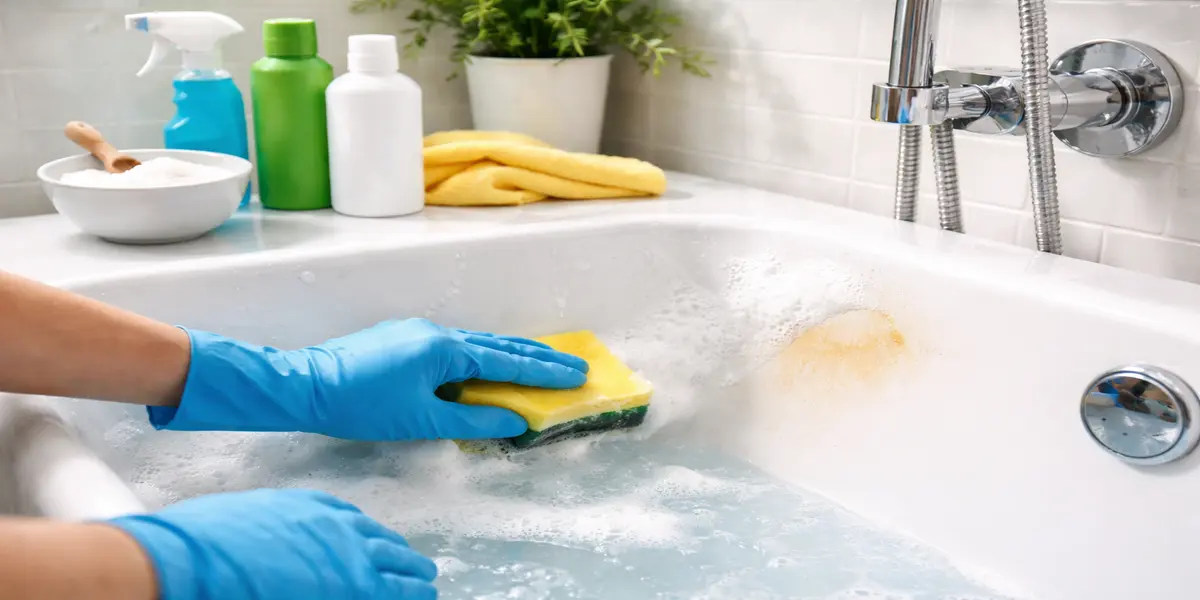
Ever wondered why your bathtub is still stained though you clean it regularly? You wipe and wash the surface and still there appears to be dull marks or soap scum or yellow stains. Bathtub stains are one of the most widespread issues in the houses since the remains of the soap, minerals in water, moisture, and everyday use gradually accumulate on the surface. With time such stains end up rendering the bathtub old and dirty despite the fact the entire bathroom is clean.
The pleasant thing to note is that you do not necessarily have to spend a lot of money to resolve this issue. You can use the simple household items and right methods to get rid of the hardest to clean stains and give your bathtub a new clean look. These are some of the best methods of cleaning bathtub stains like a professional. Keeping the bathtub stain-free is also important during vacate cleaning, when the bathroom must be left spotless before moving out.
1. Identify the Type of Stain
The initial action that one can take to clean a bathtub well is to identify the type of stain that you have, according to the cleaning professionals. Various stains will need varying cleaning methods. Soap scum is a normal phenomenon that forms a gray or opaque film that is the result of soap dissolved in water that combines with the minerals. The build up of different minerals usually leaves behind a white or yellow stain on the surface as a result of hard water. Rust spots appear as brown or orange spots, which most likely are a result of iron in water or metallic fittings.
2. Begin With a Basic Cleaning Agent
A basic cleaning solution can surprisingly work well in the case of regular maintenance and light stains, similar to cleaning with castile soap. A small amount of dishwashing liquid added to warm water provides a light cleaner which is able to clean dirt, body oils and traces of mild soap.
Run a soft sponge/microfiber cloth and lightly cleanse the bathtub. The practice also befits most of the bathtub materials and helps in keeping the surface clean without any damage. Scrub then rinse the bathtub with clean water. This cleaning will prevent stains and will keep the tub fresh due to such frequent cleaning.
3. Stubborn Marks Use Baking Soda
To a great extent, baking soda can be a very effective cleaning solution when stains get more visible. It is used as a non-corrosive abrasive that allows cleaning the surface of the tub without corrosion.
Sprinkle the parts where there is a stain with baking soda and add a small portion of water to create a paste. Allow the paste to rest on the stain (approximately ten minutes) to enable it to loosen the deposit. Then rub the area softly with a soft sponge or the brush and then apply warm water. Baking soda is effective especially in the case of soap scum and slightly discolored areas.
4. Cleopatra Vapor Certified Hard Water Stains Remover
Most bathrooms are stained with hard water that makes the bathtub appear dull. White vinegar also comes in handy with the mineral deposits which cause these stains. Follow the following steps for a great result also suggested by the expert teams.
Apply vinegar to the area that is affected directly and leave it to dry after a period of fifteen minutes. The vinegar dissolves the minerals in the process. Then wipe the place using a sponge or soft brush and leave the bathtub to run under water. This basic technique is capable of returning the lost natural shine of the tub and eliminating the tough mineral stains.
5. Treat Rust Stains Carefully
Rust stains may prove harder to remove and a tender yet working solution has to be used. In this case a combination of baking soda and lemon juice will work. Put the paste onto the rust stain and leave it to dry up in about fifteen to twenty minutes.
The lemon juice acidity is used to loosen the rust with the help of baking soda to assist with the light scrubbing. Wait and then dry scrub the location lightly and make sure it is rinsed with water. The presence of rough scrubbers like steel wool should be avoided as this may scratch the bathtub surface causing future stains to increase.
6. Clean Mold and Mildew
Bathrooms are usually humid, and hence they become the best habitats of moulds and mildew to develop. Such stains tend to be dark spots on the edges of the bathtub or at the corners where water is pooled.
They can be removed by use of a simple mixture of vinegar and water. Apply the solution over the affected region and allow it to dry after a period of fifteen minutes. Afterwards, rub and run the place under the tap. Maintaining ventilation of the bathroom and wiping off wet surfaces would prevent mold and mildew recurrence.
Conclusion
Bathtub stains can appear very hard to clean however with the appropriate procedures they can be managed easily. The stain, cleaning the bathtub regularly, as well as identifying the stain, with the help of some simple ingredients, such as baking soda and vinegar, will help to keep the bathtub clean and shiny. With the right equipment and proper maintenance, it is quite easy to keep your bathtub clean and tidy using a few tools thereby making your bathroom look cleaner and more comfortable each day.