
Key Takeaways
- Check the manufacturer’s care instructions before cleaning.
- Vacuum the mattress thoroughly to remove loose dust and debris.
- Treat stains quickly using minimal moisture.
- Avoid soaking foam, latex or other absorbent materials.
- Test cleaning solutions on a hidden area first.
- Use baking soda carefully to freshen mild odours.
- Allow the mattress to dry completely before using it.
- Consider professional cleaning for severe stains or persistent smells.
Having a tidy and clean mattress contributes to a more appealing and comfortable bedroom environment. Regularly sweat body oils, dust, dead skin, etc. together with allergens are embedded in your mattress surface. Similar care is also needed for carpets, where Carpet Cleaning Gold Coast can help maintain a cleaner indoor environment. Too much water is probably the most frequent mistake that someone might make after the cleaning. When you’re questioning, ‘how to safely clean a mattress,’ using the right technique is key.
In this article you are going to learn simple and effective cleansing methods, which you can apply to your mattress after some time of use and won’t do you the same damage by way of it.
Table of Contents
Check Your Mattress Before Cleaning
Prior to beginning, determine what kind of mattress you have and read its care label thoroughly. Different types of mattresses such as memory foam latex innerspring, and hybrids require different cleaning methods given materials and manufacturing techniques. Remove all blankets, pillow cases, and mattress encasements before carrying out an inspection. You also need to look closely at seams and edges as these can be the areas where fine dust or hair particles settle. This preliminary examination allows you to choose an appropriate cleaning procedure, and minimizes the likelihood of application of too much moisture or unsuitable substances.
| Mattress Type | Recommended Approach | Avoid |
| Memory foam | Gentle vacuuming and spot cleaning | Excessive water |
| Latex | Light spot treatment | Soaking |
| Innerspring | Vacuuming and careful stain treatment | Harsh chemicals |
| Hybrid | Follow manufacturer instructions | Heavy moisture |
| Pillow-top | Gentle surface cleaning | Aggressive scrubbing |
Vacuum Away Dust And Debris
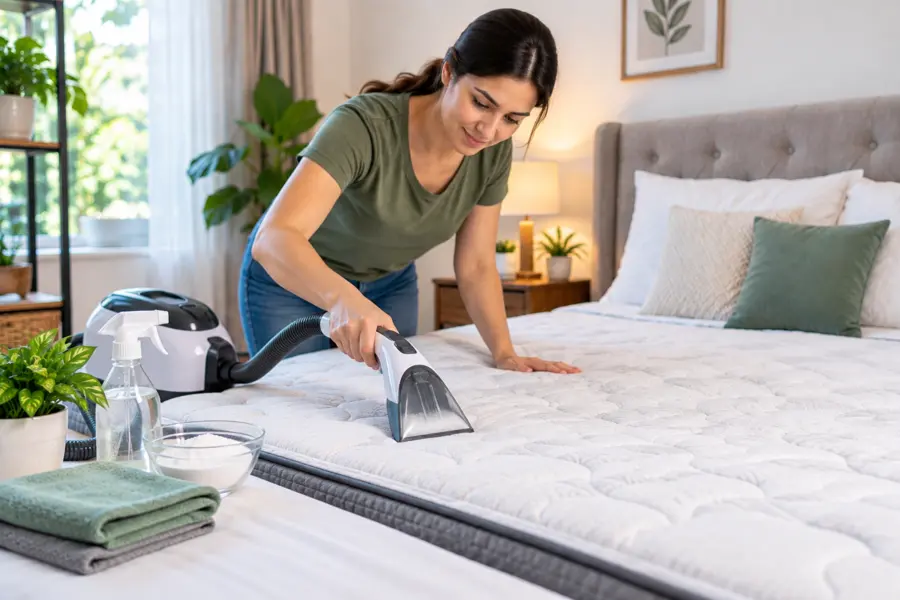
Vacuuming your mattress can be considered as the very first cleaning step after vacuum. Do not forget to also move the vacuum very slightly so that it goes over the same area slightly and thoroughly. Vacuuming in and of itself is quite effective in getting deep down the mattress and the dust hidden in mattress fibers. Dust will accumulate in areas such as under the springs or seams so don’t forget to get that as well. For the sides, you may opt to use a mild cloth and simply wipe them. Just don’t press the vacuum head too firmly for the pressure applied could ruin sensitive surfaces or softer materials.
Treat Stains With Minimal Moisture
Treat mattress stains based on the type and following manufacturer’s instructions. The most common stains you might encounter are sweat urine stains from food and drinks in general as well as body oils. If you are trying to get out a stain that is stuck, first get a clean cloth slightly wet with cleaning liquid suitable for the fabric involved but make sure you do not get any such solution or any water on the mattress and always do a test in a less visible part of the fabric. The idea is to do very small gentle blotting actions and not at all to drench the spot to the point of saturation.
Use Baking Soda For Freshness
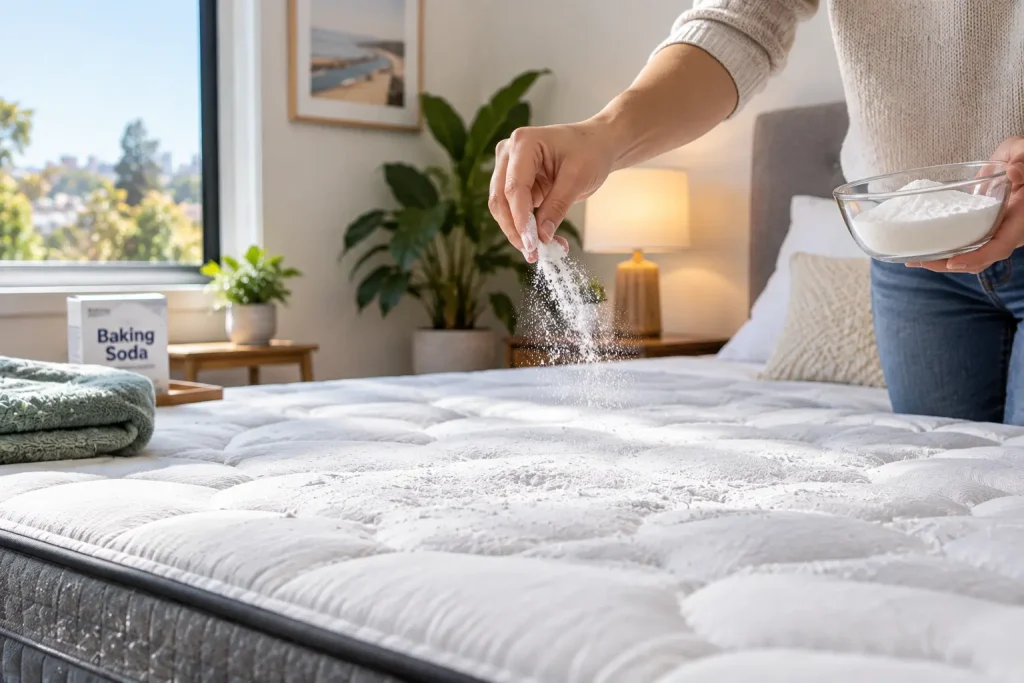
Baking soda is really effective at naturally absorbing bad smells and one of the best ways to rid yourself of smells on the mattress. After vacuuming the mattress first, spread just a very little amount of baking soda over the dry surface. Let it rest a bit while the fabric of the mattress gives up its extra moisture and baking soda simultaneously removes bad odours. Baking soda provides basic freshness for cleaning but it is no substitute of adequate stain removal or deep cleaning. Always consult manufacturer’s cleaning instructions prior to applying household powders to your mattress.
Avoid Excess Water And Harsh Products
Many materials used in mattresses can be damaged by too much moisture since water can go all the way into the layers inside. A damp rag is most likely to do the job safely for small spots rather than putting the whole bed into water and detergents must not be placed on the mattress. Bleach and other strong chemicals may change the color of the textile, dull the colors quite a bit or damage the core materials of the mattress altogether unless the product’s maker has clearly stated it is safe. The objective is to clean the dirt, grime and spots by exposing them to the moisture for the least time possible.
Remove Unpleasant Mattress Odours
Smells from a mattress are often the result of the build up over time of body sweat, body oils secretions, and spills together with moisture, trapped between the sheets and mattress. The first step is to clean the surface all over to remove the dust and particles that may have a bad smell or contribute to the day to day smells coming from the mattress. For light odours, baking soda will offer a nifty freshening treatment when applied properly. Follow the directions on the product and don’t soak the surface. Adding more deodoriser repeatedly may be like covering up an issue. Stubborn odours may require professional mattress cleaning.
Dry Your Mattress Completely

In fact, besides cleaning, drying is also an essential part in your safest, most efficient mattress care method. Pat it with a fully dry towel, trying to take out as much moisture as you can. Watch the heat carefully as too strong blowing may result in your mattress getting dehydrated too quickly. Place in an area with good airflow and allow the air to circulate. Homes in Gold Coast may also benefit from keeping the room well ventilated during this stage. Do not get the drying stage done too quickly because wet trapped inside can encourage the growth of mold and cause other difficulties.
Maintain Your Mattress Between Cleans
Daily care prevents the accumulation of dirt and helps in the removal of embedded dirt. The way to keep your mattress clean is by washing your bedding frequently and following the directions for the specific type of fabric. Stains caused by a dirty hand on the bed surface are a continuous risk of having the sheet covered with stains. Turning is not advised if it is your mattress that has only a sleeping side. Proper ventilation in the bedroom also becomes a means of dealing with humidity. These small measures besides keeping the mattress looking pristine are good ways to keep it lasting longer.
Know When To Hire Experts
Home cleaning works well for regular maintenance and light staining, but there are certain mattresses that need special care and attention. Professional mattress cleaning may be needed for heavy soiling, stubborn stains or lingering odours that the methods of the home are not able to clear up. Qualified repairers are able to test the mattress material and apply the correct cleaning processes. In case of uncertainty, manufacturers’ instructions or recommendations of professionals are the most reliable ways to obtain the information that will help avoid expensive mistakes.
Conclusion
Taking the time to learn about how to clean your mattress safely without damaging it. You should look for the manufacturer guidelines on top of getting to know the type of mattress material you are dealing with. The same care is important when considering mistakes to avoid when you clean painted walls, as using the wrong method can damage surfaces. In these modern days mattress cleaning specialists may be your only choice to get rid of deep seated stains or really difficult smells besides heavily soiled mattresses in a safe and thorough manner.
Frequently Asked Questions
- How Often Should I Clean My Mattress?
Vacuum your mattress every few months and treat spills as soon as they happen. Deeper cleaning depends on its condition and usage.
2. How to Clean Your Mattress Safely?
Start by checking the care label, vacuuming the surface and treating stains with minimal moisture. Avoid harsh chemicals and excessive water.
3. Does Baking Soda Clean A Mattress?
Baking soda can help absorb mild odours and freshen the mattress surface. Vacuum it thoroughly after several hours.
4. When Should I Hire A Professional?
Consider professional mattress cleaning for stubborn stains, heavy soiling or persistent odours that cannot be safely removed with household methods.