

Weekly House Cleaning Schedule For Busy Families
Maintaining a home is hard enough without working or driving kids to school and back, handling family commitments and all the rest of life’s demands. For a lot of Australian families, weekends are filled with catching up on laundry, vacuuming, mopping and finishing household chores. The challenge isn’t always cleaning. It’s having a non-overwhelming routine. One way to reduce the stress that usually comes with cleaning your home is to have a schedule of your cleaning needs for each week. By making different laundry rules for each of your rooms, you can turn your cleaning sessions into manageable chunks instead of cleaning everything in one go, only to find that it gets dirty again after a long time.
Ultimately, you want to produce a simple cleaning plan which coincides with your daily life and, most importantly, helps you keep your house well-ordered. If you distribute the little chores you need to do over the week, you’ll be tackling them gradually rather than being left with a huge amount of work, which you will have to do at once, leading to feeling overwhelmed.
Table of Contents
Why Weekly Cleaning Works
Most homes are only cleaned when the clutter is impossible to deny. Sadly, waiting until it is all crying out for attention can give the feeling that cleaning is overwhelming. Doing a good job following a regular Weekly House Cleaning Schedule divides up the bigger chores into smaller bits that you can handle. Rather than do a once-over coat of paint on each room at the same time, you work right through each space.
That means the approach is that is more predictable and less reactive and, as a result, much of the cleaning becomes less stressful. In fact, with the lack of time, parents learn that small and short bursts of cleaning work better than long and rare days of cleaning. And with a routine, the house stays not only superficially clean, but also the weekends can be spent resting, with family, or doing whatever else you want!
Start With Daily Habits
A good weekly routine begins with a sensible daily schedule for cleaning. Small daily jobs aren’t meant to eat up too much of your time but rather help reduce the chance of clutter building up. Things like making your bed, wiping down your kitchen counter, emptying your dishwasher and putting things away will keep your house clean and tidy. All of the small things you do will accumulate and help keep your house clean. If you do ’em regularly, these habits’ll take a big chunk out of your weekly cleaning sessions.
Daily Cleaning Schedule
| Time Of Day | Suggested Tasks |
| Morning | Make beds, open windows, tidy surfaces |
| Afternoon | Load dishwasher, wipe kitchen benches |
| Evening | Quick vacuum, tidy living areas |
| Before Bed | Empty bins and reset common spaces |
Daily cleaning times are brief enough that even during hectic periods, you will still easily be able to continue with your daily cleaning habits.
Divide Tasks Across Days
The best way to utilise your Weekly House Cleaning Schedule is by giving priority to individual tasks according to their day of the week, as well as cleaning only one classification of area each day instead of cleaning through every room multiple times.
Weekly House Cleaning Schedule
| Day | Main Cleaning Focus |
| Monday | Laundry and bedroom reset |
| Tuesday | Bathroom cleaning |
| Wednesday | Kitchen maintenance |
| Thursday | Dusting and surfaces |
| Friday | Floors and vacuuming |
| Saturday | Flexible catch-up cleaning |
| Sunday | Light refresh and preparation |
This system prevents too much cleaning and maintains manageable duties.
Focus On High-Traffic Zones
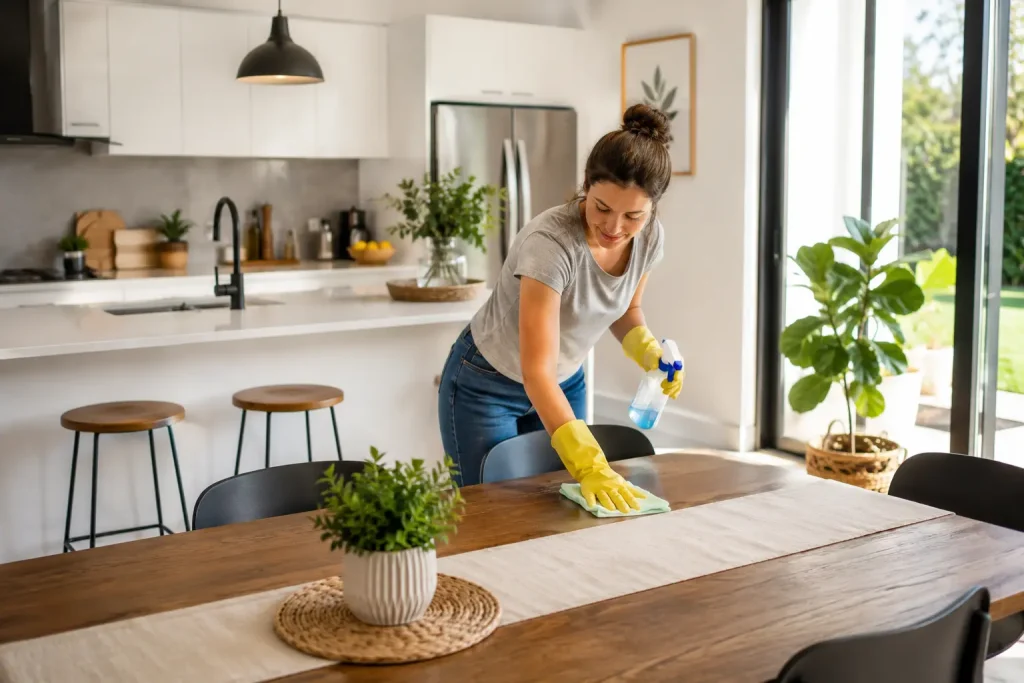
Not every room gets dirty at the same rate. High traffic areas should be cleaned more often during the week. Kitchens, baths, foyers and family rooms are usually the greatest repositories of dust, clutter and grime. Regular property cleaning services can also help keep these busy areas consistently fresh and well-maintained. Focusing on these rooms has a rippling effect of cleanliness throughout the home. Instead of dividing your time evenly between all the rooms, concentrate on keeping these high-traffic areas clean on a regular basis, and save the low-traffic areas for scheduled cleaning sessions. This method produces noticeable results without taking more time.
Keep Supplies Easy To Reach
Cleaning feels more like a hassle if your supplies are scattered throughout the home. Organizing cleaning stations reduces the amount of mess and waste created. By placing often-used items close to each other in either a single small caddy or cupboard, you will be able to find them quickly when needed. Cloths, sprays, gloves and vacuum attachments left at hand make getting started on jobs easier. Preparing a Weekly House Cleaning Schedule is much easier for Families to keep up with when it only takes a few minutes to prepare. Tweaks to organization can often yield better results, with better consistency, rather than adding more cleaning time.
Create A Family Cleaning Routine
When everyone pitches in, cleaning the house is so much easier. Actually, you can also engage young children in the process by allowing them to perform simple tasks that they could handle according to their age. Giving out household chores based on one’s age or skills not only distributes the work but also helps children to understand and appreciate responsibility.
Younger kids might assist in putting their toys away and making their beds, while older kids and parents could take care of vacuuming and cleaning the bathroom. Establishing shared routines can also help stop one person from playing housekeeper, cook, gardener, and child-carer of all. Clean as a group and you will laugh a lot and it will encourage consistency and soon, you might find you don’t need to yell for everyone to help.
Adjust Your Schedule Seasonally
There are cleaning requirements that vary throughout the year. Periodic seasonal modifications ensure efficiency without imposing extra labour. As people are bringing dust and dirt back into their homes as opposed to keeping them outside on a more frequent basis during the cooler months, cleaning of floors is typically required and done more often. School holidays, celebrations and visitors also disrupt routines. A twice-yearly review of your Weekly House Cleaning Schedule helps to ensure that it’s still working for your household, as opposed to becoming something too difficult to stay on top of. Flexibility contributes to easier success in the long run.
Build Long-Term Cleaning Success
The most effective cleaning schedules keep simplicity at their core so individuals are able to stay on track regularly. Don’t make the mistake of making impractical plans with difficult-to-reach goals; just scale back your expectations of the number of things to accomplish weekly instead of just stopping entirely when you find the plan is too ambitious for you. Utilising reminder alarms, realistic expectations, and lowering standards can gradually challenge household cleaning much less.
Besides, a home does not have to be clean every day. Developing a regular cleaning schedule will soon bring about the desired results. Adopting a holistic approach will not only help busy families maintain their homes cleaner, but they will also have extra time to rest instead of working on house chores.
Conclusion
Cleaning up after your family does not have to consist of numerous long hours of housework or lots of frantic weekend clean up jobs. An effective Weekly House Cleaning Schedule enables cleaning chores to be kept orderly and fairly easy to do throughout the week. Small amounts of daily house cleaning, done on a regular basis and combined with some simple daily cleaning schedules, will help to prevent dirt from building up and also cut down on the amount of work overall.
Australian families can have cleaner homes with less stress and more time to spend on things they enjoy by focusing on the most commonly used spaces in their home and having everyone pitch in to help clean. Do your best to break things down to the most common areas to create an easier path to a clean home for all families. Consider beginning small, leaving doors unlocked for others to use, and developing a routine that works for your style and the routine of your family. For additional insights, read our guide on the most common cleaning complaints from property managers to understand the areas that often require the most attention.